How it works
How a drawing becomes a FAIR.
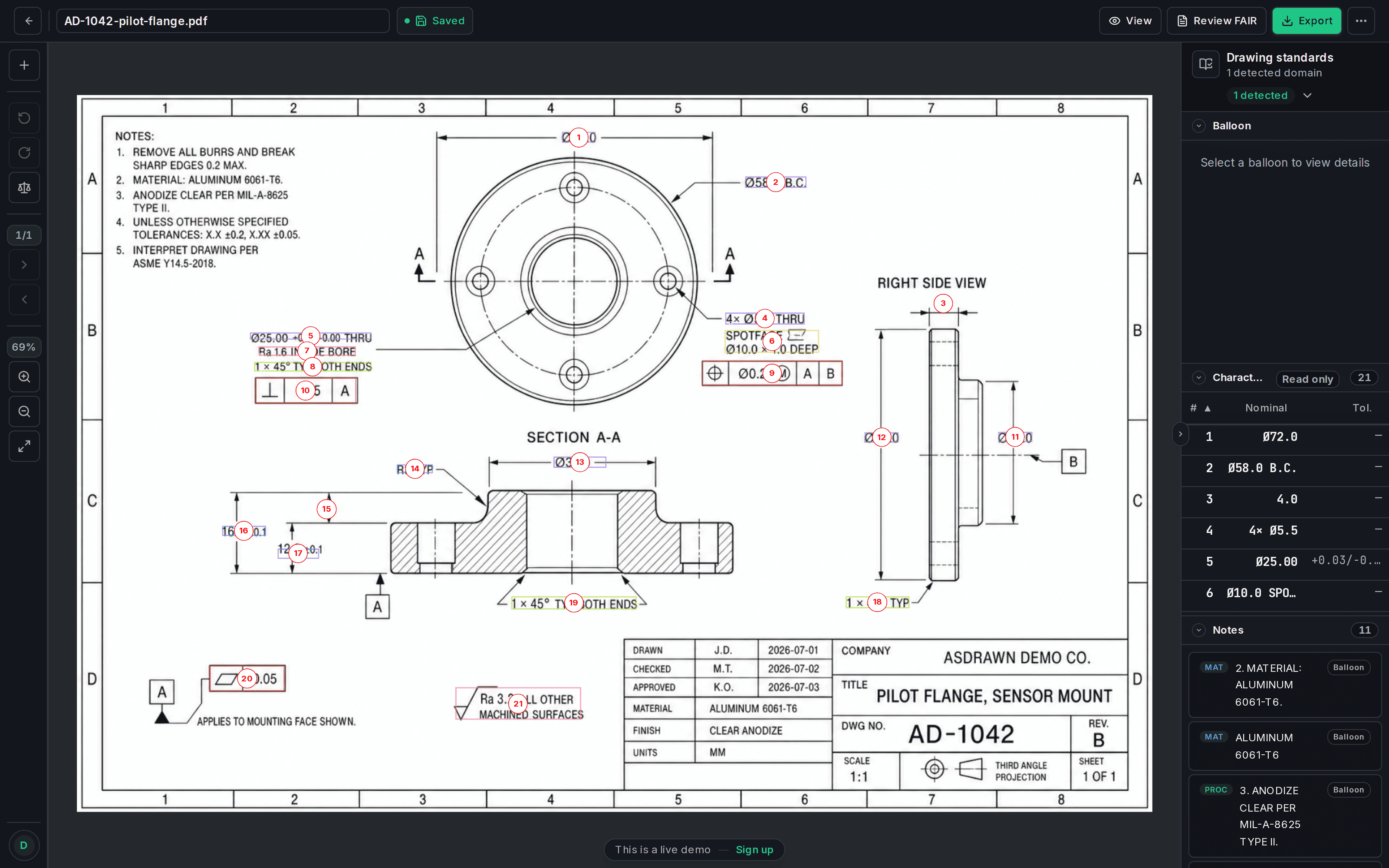
Upload an engineering drawing as a PDF. ASdrawn reads it — views, title block, notes, dimensions, and GD&T — detects the inspection characteristics, and balloons them onto the print. You open the result in the editor, where every extracted characteristic sits beside its source callout: verify it, adjust anything the AI got wrong, and sign off. Then export the deliverable — an AS9102 Rev C FAIR review workbook plus the annotated, ballooned PDF. No CAD files, no templates to wire up: the drawing you already have goes in, and a review-ready first-article package comes out.
01
What happens when I upload a drawing?
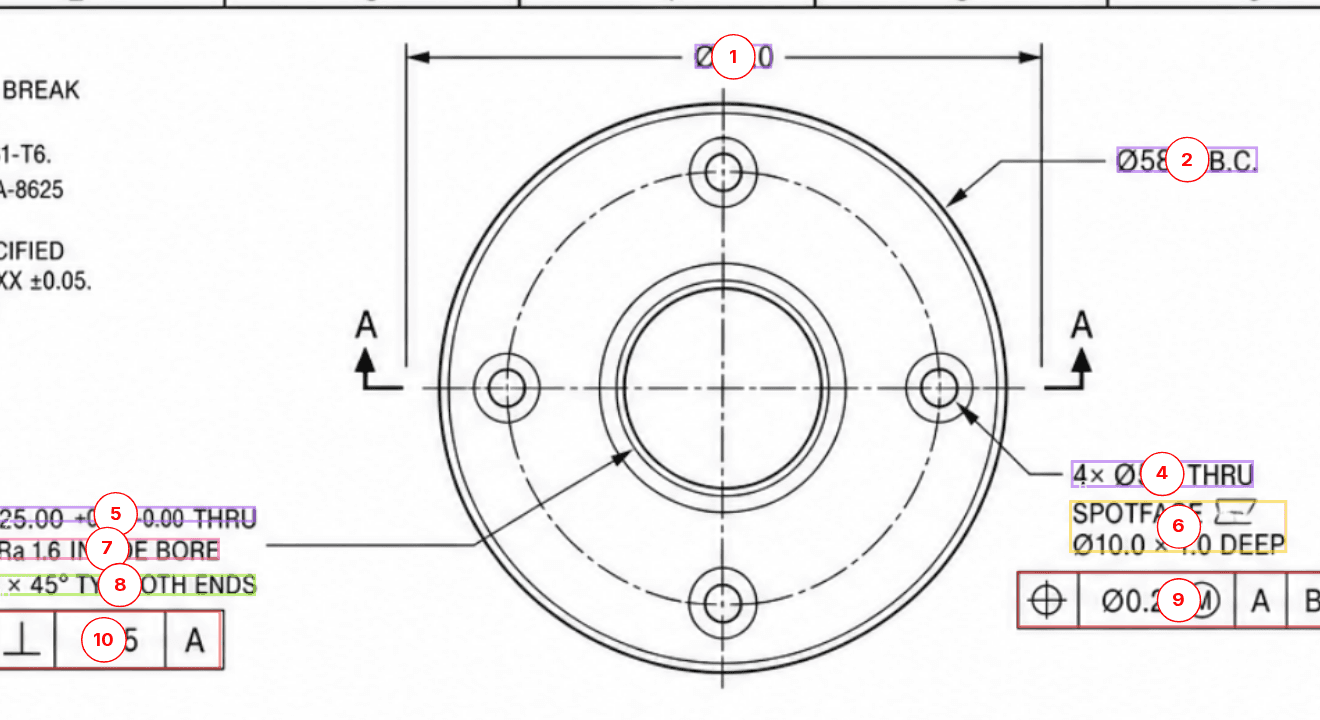
ASdrawn reads the whole drawing, not just the dimensions. It parses the views, the title block, the general notes, and every dimension — feature control frames, datums, threads, chamfers, surface-finish symbols, and flag notes included. Multi-sheet PDFs are handled sheet by sheet, and the read is revision-aware.
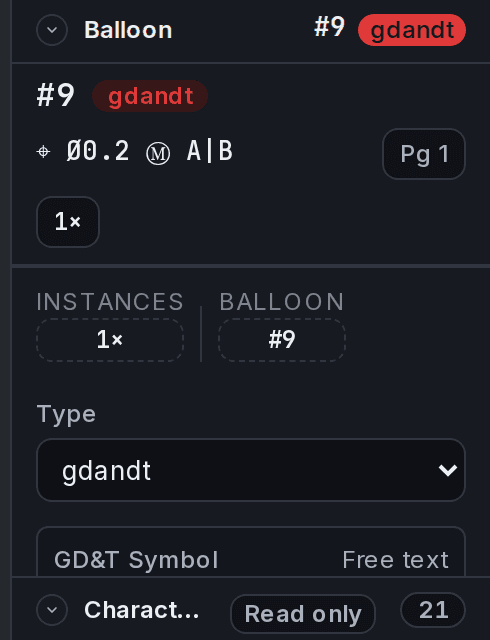
Each callout it finds is detected and classified into a characteristic type, so what comes back isn’t a blob of text — it’s a structured list of the things an inspector actually has to check. Anything ambiguous is flagged for your review, not quietly guessed.
02
How do balloons and the Form 3 stay traceable?
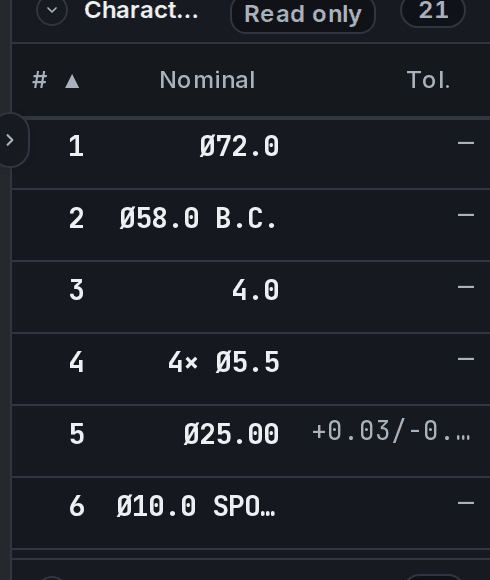
Every characteristic ASdrawn detects gets a numbered balloon placed on the drawing, and every balloon links back to a row in the workbook. Renumber, move, add, or delete a balloon and the workbook follows the edit — the numbering on the print and the numbering in the report never drift apart.
That one-to-one chain is what makes the package auditable. A reviewer can walk from a row on the AS9102 Rev C Form 3 to its balloon, and from the balloon to the exact callout on the drawing, in seconds. The outputs are the annotated, ballooned PDF and the Rev C workbook — the two artifacts that go into the FAIR package.
03
What does the review step look like?
ASdrawn drafts the accountability package; a qualified person decides what ships. In the editor, every extracted characteristic sits beside its source callout on the drawing — you verify each one, adjust anything that’s off, and sign off.
This is where honesty matters. Reliably extracting GD&T feature control frames, datum references, and blanket “unless otherwise specified” tolerance notes is the genuinely hard part of reading a drawing — for every tool in this space, not just ours. So ASdrawn is built around review rather than around a claim of perfect automation: ambiguities are flagged for a human, not guessed, and nothing is signed off until a qualified person has verified it against the drawing.
That matches how AS9102 itself works — a first article inspection is complete only when a qualified person has reviewed and signed the FAIR. The workflow is shaped to fit that requirement, not to work around it.
04
What do I get out?
The deliverable is a standard AS9102 Rev C FAIR review workbook — Forms 1, 2, and 3 in Excel, populated from the drawing and your part data — together with the annotated, ballooned PDF that goes in the FAIR package. In form it’s indistinguishable from a hand-built package, except every row traces cleanly to its balloon.
If you need the characteristic data somewhere else, the editor also exports the characteristics table as CSV or JSON for ERP, quoting, and inspection tooling. It all works from the drawing PDF — the artifact you already have contractual obligations against — so there’s nothing to model and no CAD file to supply.
05
What happens when the drawing gets revised?
Rev B is where FAIR work quietly gets redone. ASdrawn compares two revisions in one screen: overlay them with colour-matched balloons and adjustable layer opacity, with match lines connecting the same characteristic on each print. Matches are scored and queued for your review — confirm them, and anything without a counterpart is flagged instead of guessed.
Then the part that protects your paperwork: accept the alignment and ASdrawn carries the previous revision’s balloon numbering onto the new one, right in the editor, as a single undoable step. Matched characteristics keep the numbers your previous FAIR used — no re-ballooning from scratch, no renumbering surprises.
Most tools make you choose: a pixel overlay that doesn’t know what a balloon is, or a text change-log with no view of the print. This is both at once, on the inspection data you’ll actually submit.
See it on your own drawings.
Upload a drawing PDF and hold the output — workbook, ballooned print and all — to your own standard.